Strategy and planning
PRDs, PR/FAQs and specs
Writing product requirement docs and Amazon-style PR/FAQs that align teams.
Misalignment is expensive. A team that "kind of agrees" on a feature discovers the disagreement in code review, QA, or after launch. A PRD and its cousins exist to force clarity before that happens: what problem we are solving, for whom, what success looks like, and what we are explicitly not doing.
The right size depends on the bet: a one-pager for a small experiment; a PR/FAQ for a new product line; a living PRD for a multi-squad feature. Product owns the problem and the observable behavior. Engineering owns the implementation design. Mixing those too early locks the wrong decisions.
A PRD earns its keep when someone new can read it and answer: what problem, for whom, what does done look like, what must not break, and what are we deliberately skipping?
Write non-goals and metrics first. If you cannot, you are not ready to spec. Prefer observable behavior over adjectives: "Issues list p95 < 300 ms" beats "the page should feel snappy." Put edge cases in the doc — empty states, permissions, retries, a down dependency, migration — so every engineer does not invent a different policy.
The cost of under-documenting is rework and political thrash. The cost of over-documenting is theater. A bugfix needs no PRD; a new product line needs a press release before a field list. After review, publish a one-line changelog of decisions so old comments do not sneak back in as requirements.
Concepts in this section
| Step | Concept | What it answers |
|---|---|---|
| 1 | Writing a PRD | Which sections, and when you need a doc at all |
| 2 | Requirements vs specs | Who owns behavior vs implementation |
| 3 | PR/FAQ | When to write the press release first |
| 4 | Acceptance criteria | How P0s become testable, including edge cases |
| 5 | Living PRDs | Status, changelog, one home, pairing with design docs |
In interviews, narrate problem → users → goals → non-goals → requirements → risks. That is a verbal PRD. Mention acceptance criteria for one tricky edge case. Interviewers rarely want a novel; they want structured clarity under time pressure.
Common mistakes
- Solution in the problem statement. Rewrite until the first paragraph names who hurts.
- Empty non-goals and metrics that are ship dates.
- PRD as API spec, or a ticket as a new product line.
- Stale "approved" docs with no changelog of decisions.
Key takeaways
- PRDs align teams on problem, users, metrics, non-goals and requirements before code.
- Non-goals and open questions are as important as the feature list.
- Amazon PR/FAQ writes the customer press release first to kill weak ideas early.
- Acceptance criteria and edge cases make requirements testable. Right-size the doc; keep it living; pair with eng design docs for the how.
Further learning
Working Backwards — Bryar & CarrThe management processes behind Amazon’s success Build better mechanisms to invent, operate, and make decisions at scale. Colin Bryar and Bill Carr spent a combined 27 years as senior Amazon executives and wrote the b…Working Backwards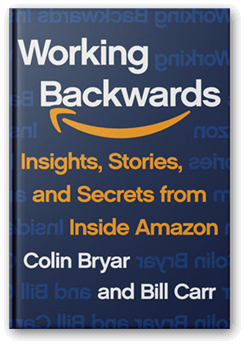 Working Backwards PR/FAQ processAmazon's customer-obsessed product development process, in which teams write the press release and FAQ before building anything.Working Backwards
PR/FAQ instructions and templateWorking Backwards PR/FAQ Instructions & Template Working Backwards PR/FAQ Instructions & Template Start with the customer and work backwards—harder than it sounds but a clear path to innovating and delighting customer…Working Backwards
Lenny's NewsletterDeeply researched product, growth, and career advice for product leaders, founders, and ambitious builders. Click to read Lenny's Newsletter, a Substack publication with millions of subscribers.lennysnewsletter.com
Working Backwards PR/FAQ processAmazon's customer-obsessed product development process, in which teams write the press release and FAQ before building anything.Working Backwards
PR/FAQ instructions and templateWorking Backwards PR/FAQ Instructions & Template Working Backwards PR/FAQ Instructions & Template Start with the customer and work backwards—harder than it sounds but a clear path to innovating and delighting customer…Working Backwards
Lenny's NewsletterDeeply researched product, growth, and career advice for product leaders, founders, and ambitious builders. Click to read Lenny's Newsletter, a Substack publication with millions of subscribers.lennysnewsletter.com SVPG articlesA partnership dedicated to teaching best practices to product teams and product leadersSilicon Valley Product Group
 Amazon Narratives: Memos and Working Backwards — Future / a16zLearn early inside stories behind (ultimately) big business moves like AWS, Kindle, Prime — and the leadership principles, decision making practices, and operational processes that got them there.Future
Related
Design docs and RFCs
Writing design docs that get to a good decision quickly — structure, alternatives, review, and when a one-pager is enough.
Prioritization
RICE, ICE, Kano, cost of delay and opportunity cost: choosing what not to build.
Working with product managers and designers
Product sense for engineers — shaping scope, trade-off conversations, feasibility spikes, and building the right thing with PMs and designers.