Shipping and specialties
Diagnosing a DAU drop
Verify the dashboard, scope the cut, split acquisition vs retention, then rank hypotheses. Jumping to a home-feed redesign is how candidates fail.
A classic prompt: "DAU fell 10% week over week. What do you do?" Work it like an incident plus a product diagnosis. Many candidates skip verification and jump to a redesign. Interviewers notice.
The same playbook is how you should talk about a real funnel drop at work. Engineers should prep one metrics diagnosis story from real work (an outage or funnel drop) using this language — authenticity beats invented consumer examples.
The big idea
- Verify — Is the dashboard correct? Timezone, bot filter, logging change, instrumentation bugs (experimentation pitfalls mindset).
- Scope — Platform (iOS/Android/web)? Geo? New vs returning? App version? Acquisition channel?
- Decompose DAU — New users × retention of older cohorts. Is it acquisition collapse or retention collapse? See retention.
- Funnel — Where in activation did conversion fall? Push notification deliverability? Login outage?
- External — Competitor launch, seasonality, store ranking, OS permission change, holiday.
- Hypotheses ranked — 3–5 causes with how you'd confirm each (query, survey, status page).
- Actions — Mitigate (fix outage, revert bad release) vs investigate (week-long analysis). Say what you'd do today.
A fire alarm is the picture: first check it is not a burnt toast (instrumentation), then which floor (scope), then whether new guests never arrived or old guests left (acquisition vs retention). The analogy breaks when several causes stack — still rank them, still say what you do today.
Walking through it
DAU −10%. iOS-only, version 12.4, US. Returning users flat; new-user D1 retention cratered. Crashlytics shows a crash on the new onboarding permission screen. Action today: rollback 12.4 or kill-switch the screen; confirm DAU recovers; then write the postmortem. A candidate who jumps to "redesign the whole home feed" fails the diagnosis.
Practice saying the verification step out loud first. Then scope. Then split new vs returning before you invent a growth strategy.
Common mistakes
- Skipping verify. Logging changes look like 10% DAU drops.
- Redesigning before scoping. iOS-only + one version is a release, not a strategy problem.
- Listing every KPI. One north star, the decomposition (new vs returning) and the action for today.
Check yourself
- DAU −10%, iOS-only, version 12.4, new-user D1 cratered, returning flat. First action today?
Rollback or kill-switch 12.4, confirm DAU recovers, then postmortem. Not a home-feed redesign.
- Why split new vs returning before listing hypotheses?
Acquisition collapse and retention collapse are different problems with different owners and different same-day actions.
Key takeaways
- Verify data, then scope, then split acquisition vs retention, then hypotheses and a same-day action.
- A version-scoped crash is a rollback, not a strategy offsite.
- Bring one real diagnosis story from work; the language transfers.
Further learning
Lenny's definitive guide to product sense interviewsA step-by-step playbook to help you ace your PM interviewlennysnewsletter.com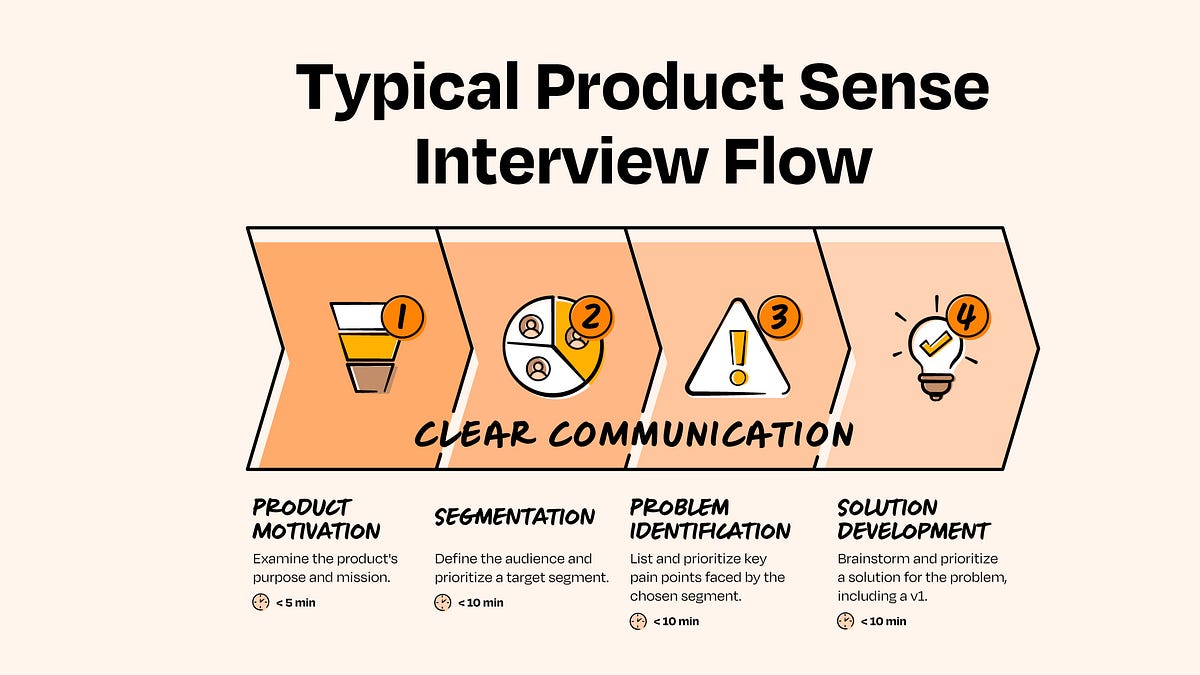
Next: judgment and drills in product sense practice.
Related
Product sense interviews
Structured answers to product design, improvement and metrics questions. Start here for the map.
Retention and engagement
Retention curves, cohort analysis, DAU/MAU and why retention is the foundation of growth. Start here for the map.
Experimentation pitfalls
Peeking, metric fishing, sample ratio mismatch, novelty effects, network interference, CUPED and Twyman's law — how trustworthy experiments go wrong and how to catch them.