Product thinking and discovery
User research
Interviews that avoid false positives, usability tests with five users, and synthesizing findings. Start here for the map.
Talking to users is easy to do badly. Bad research produces false positives: compliments, polite interest and "I'd buy that" that evaporate when money or habit is required. Good research produces evidence about their life — problems, workarounds, switching stories — that you can act on without fooling yourself.
This is the craft of interviews, usability tests, surveys and synthesis. It pairs with jobs to be done for what to listen for, and continuous discovery for making contact a weekly habit instead of a project. Early startups use the same skills to hunt product-market fit.
You do not need a research degree. Shadow support, sit in on CS calls, join the trio for weekly interviews, pull five users who dropped at a funnel step. Engineers notice feasibility in the room; that is why discovery shares a brain with delivery.
Concepts in this section
Read them in order. Each one builds on the one before.
| Step | Concept | What it answers |
|---|---|---|
| 1 | The Mom Test | How do I ask so people cannot politely lie about my idea? |
| 2 | User interviews | Who do I recruit, and what does a 30-minute script look like? |
| 3 | Usability testing | Can they complete a real task, and why about five users? |
| 4 | Research synthesis | How do notes become insights the team can decide on? |
Support solves this user's ticket. Sales closes this deal. Research looks for patterns that should change the product. Mixing a hard pitch into a research call destroys Mom Test conditions. Promote support themes ("seven tickets this week about CSV encoding") into a research backlog item, not only a one-off patch.
Record with permission; store notes with access control. Write your hypothesis before the interview and try to kill it. Recruit churned and never-used segments, not only NPS 9–10 fans. Include at least one contrary quote in every readout.
This week: run or join one 30-minute Mom Test interview. Write three quotes, one observation cluster and one revised problem statement. For a live UI change, schedule five usability sessions before polish week — not after launch.
Common mistakes
- Pitching, hypotheticals, waitlist-as-demand. Those are false positives.
- Tours instead of tasks in usability, or helping the moment they hesitate.
- Surveys that ask "what should we build?" Wishlists, not jobs. Size known categories after qualitative work.
- Readouts that never reach the opportunity tree. Theater in a Google Doc.
Key takeaways
- Mom Test: their life not your idea, past specifics not futures, listen more than talk.
- Structure 30-minute interviews; recruit the segment, including churned and workaround users.
- Usability tests use tasks and think-aloud; about five users per design iteration.
- Affinity-map observations → insights → ideas; feed continuous discovery.
Further learning
The Mom Test (Rob Fitzpatrick)How to talk to customers & learn if your business is a good idea when everyone is lying to you.The Mom Test Why You Only Need to Test with 5 Users (NN/g)Elaborate usability tests are a waste of resources. The best results come from testing no more than 5 users and running as many small tests as you can afford.Nielsen Norman Group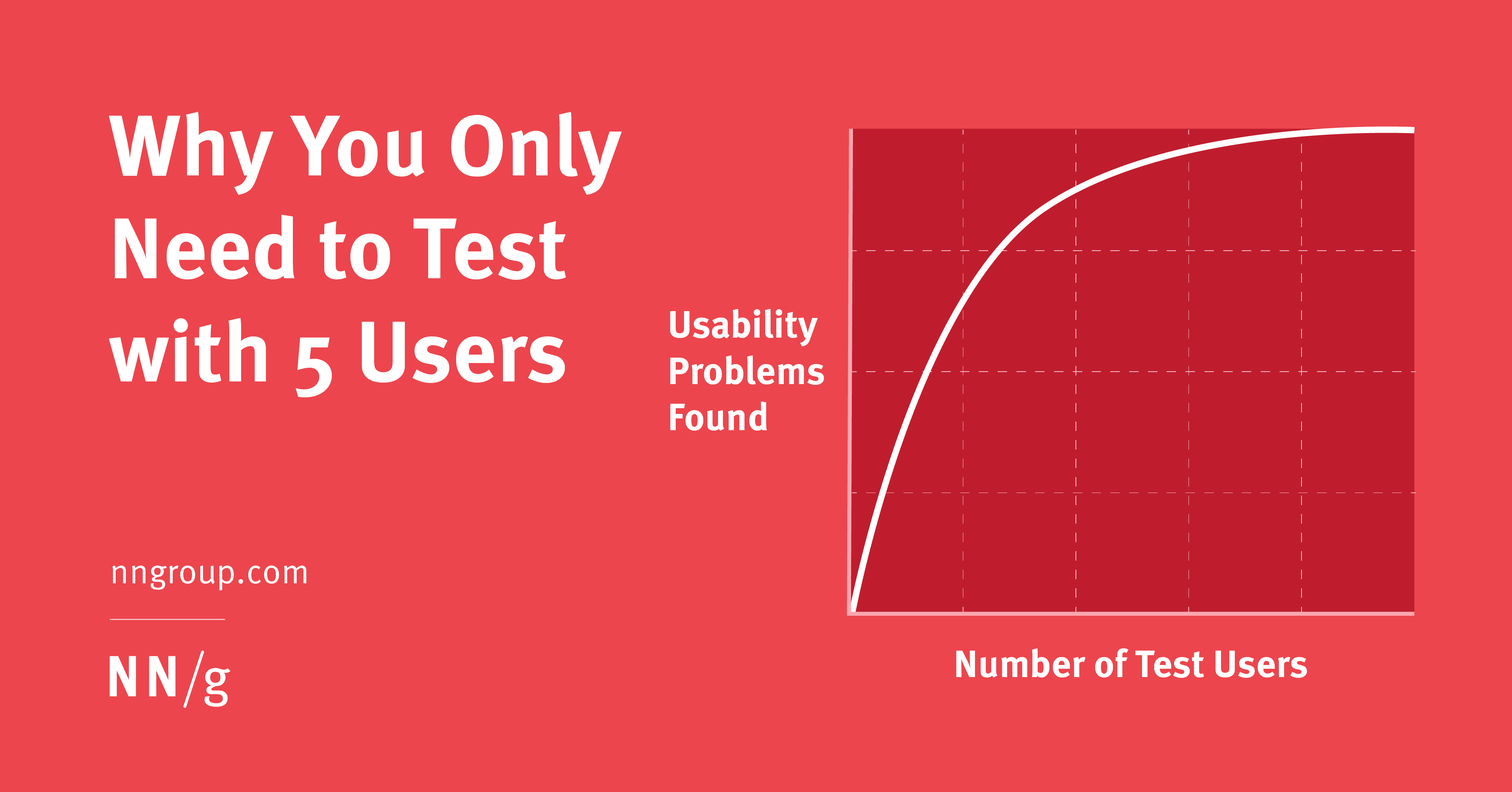
Rob Fitzpatrick live on how to talk to customers without pitching:
Related
Jobs to be done
What customers hire a product to do — and how JTBD reframes competition and features.
Continuous discovery and assumption testing
Weekly customer contact, opportunity solution trees and cheap tests before building.
Product-market fit
What fit feels like, how to measure it, the false positives that fool teams, and what changes after you find it.