Shipping and specialties
Product sense interviews
Structured answers to product design, improvement and metrics questions. Start here for the map.
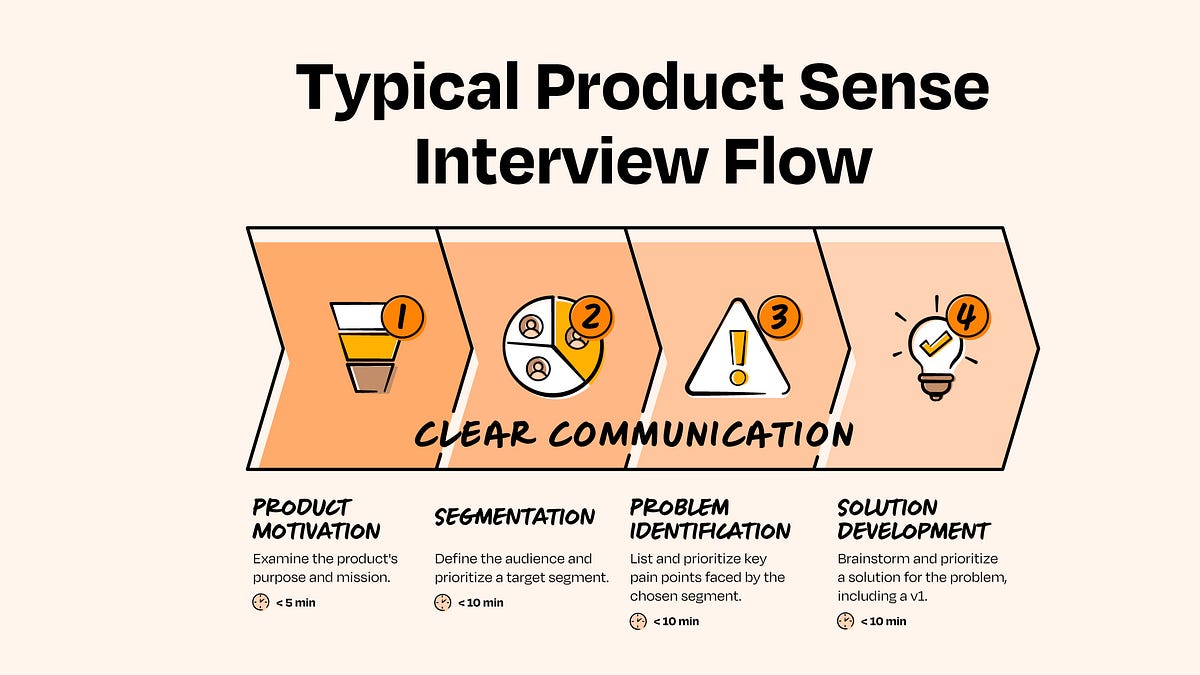
Product sense interviews test whether you can find a user, name a real pain, propose a solution that fits a company's goals and defend trade-offs under time pressure. Meta calls it product sense; Google often says product design; startups may just say "how would you improve X?" The skill is discovery, prioritization and metrics compressed into ~30–40 minutes of structured talking.
Engineers meet these rounds for PM roles, product-engineer tracks, 0→1 startup interviews and some tech-lead loops. You do not need to be a PM to prepare; you need a repeatable framework and judgment practice. The people who do well sound concrete: named users, named metrics, named cuts — not buzzwords about disruption.
Question types you will see: design ("Design X for Y"), improve ("How would you improve Instagram Stories?"), metrics ("DAU dropped 10%"), occasional estimation and strategy-lite. Prefer company-native strengths (Meta's graph, Stripe's trust) and name v1 non-goals.
Concepts in this section
Read them in order. Each one builds on the one before.
| Step | Concept | What it answers |
|---|---|---|
| 1 | Product sense framework | What sequence do I run, and which question type is this? |
| 2 | Diagnosing a DAU drop | Dashboard bug, bad release, or a real retention hole? |
| 3 | Product sense practice | How do I show judgment, and what do two weeks of drills look like? |
Most loops mix a design prompt with a metrics follow-up. If time runs out, skip a third idea before you skip the metric. Interviewers reward decisions: pick a segment by minute 8, force three different solution shapes and choose with a because against your north star.
Deconstruct apps you use weekly — segment, job, metric, one improvement — in 15-minute drills. Record one mock; most people hear they never stated a star or never picked. The same structure helps design reviews and PRDs: clarify outcome, name the user, pick a pain, propose options, choose, define metrics. Prep one real diagnosis story from work (an outage or funnel drop) — authenticity beats invented consumer examples.
Common mistakes
- Boiling the ocean, feature salad, no decision. Pick a segment by minute 8; force three distinct solutions; choose.
- Skipping verify on metrics questions. Instrumentation and scope before redesign.
- Ignoring the company. Use that company's graph, distribution or trust.
- Under-waypointing. Say the next step so the interviewer can redirect.
Key takeaways
- Know the question types; end design answers in metrics and trade-offs.
- Run clarify → goal → segment → pain → solutions → MVP → metrics; waypoint as you go.
- For metric drops: verify, scope, split acquisition vs retention, then act today.
- Timed mocks and weekly app critiques beat cramming frameworks alone.
Further learning
A full Meta/Facebook PM mock (movies product) — watch once for structure and pacing, then pause and answer yourself.
 Exponent: product management interview prepAced (formerly Exponent) helps you land your dream tech career with interview courses, thousands of real questions, AI-powered practice, and expert coaching.Aced (formerly Exponent)
 Product Sense Interview Prep (Exponent blog)A data-backed guide to product sense interviews in 2026, with a six-step framework, real questions from Meta, Google, OpenAI, and DeepMind, and advice from interviewers and candidates who've been through it.Aced (formerly Exponent)
Related
Product metrics and the north star
Choosing a north star that reflects customer value, decomposing it into input metrics teams own, and pairing it with guardrails. Start here for the map.
Interview preparation strategy
How loops work, what each round measures, and a 6–10 week prep plan that keeps coding, system design and behavioral on track.
Jobs to be done
What customers hire a product to do — and how JTBD reframes competition and features.