Strategy and planning
Roadmaps and OKRs
Outcome-based roadmaps, now/next/later, and OKRs that guide rather than constrain. Start here for the map.
A roadmap is a communication tool: it tells the organization what problems you intend to solve and in what rough order — not a contract to ship seventeen features by March 31. OKRs (Objectives and Key Results) are a related tool for aligning outcomes. Used well, they focus teams on measurable change. Used poorly, they become a second roadmap of vanity metrics and sandbagged targets.
Think of strategy as the argument for where and how you win, the roadmap as the sequenced bets that pursue that argument and OKRs as the scoreboard for whether the bets are working. Align them each quarter. For engineers: ask "what outcome is this for?" when a feature lands without a KR, and answer new requests with "what should we displace?"
Concepts in this section
Read them in order. Each one builds on the one before.
| Step | Concept | What it answers |
|---|---|---|
| 1 | Outcome roadmaps | Features with dates, or problems, outcomes and bets? |
| 2 | Now / next / later | How do we show sequence without fake dates? |
| 3 | Writing OKRs | What is a key result vs a ship milestone? |
| 4 | Roadmap capacity | How do sales commits and discovery share one quarter? |
Discovery belongs on the board as a Now item ("interview 8 churned accounts"), not invisible pre-work. If it never appears, sales pressure will cut it first. Every Now bet should name the metric it hopes to move; if instrumentation is missing, that is the first slice.
Stakeholders hear "outcomes" as evasion unless you add milestones, confidence and kill criteria. For customers, use committed / likely / exploring — never let Later into a contract. When several squads share a product, nest bets under shared themes and watch local OKRs that cancel out (growth spams email; trust raises unsubscribe).
Mid-quarter, a 30-minute OKR check (red/yellow/green, blockers, one decision) beats discovering at the retro that nobody instrumented the metric. In interviews: contrast feature vs outcome roadmaps, sketch now/next/later for a product you know, write one objective with three KRs and mention capacity buckets if they ask about sales pressure.
Common mistakes
- Feature Gantts that freeze solutions and treat discovery as a broken promise.
- OKRs as task lists, too many objectives, sandbagging, fake cascades.
- Later items pasted into contracts. Use committed / likely / exploring tiers.
- Planning every eng-week to 100%. Over-commitment is the default failure mode.
Key takeaways
- Roadmaps communicate sequence and intent; they are not Gantt contracts of features.
- Prefer outcome roadmaps; put outcomes above initiatives in now/next/later.
- OKRs pair qualitative objectives with measurable key results — optimize for outcomes, not ship lists.
- Partition capacity so sales commitments and discovery coexist without lying.
Further learning
SVPG articles — Marty CaganA partnership dedicated to teaching best practices to product teams and product leadersSilicon Valley Product Group Vision vs. Strategy — SVPGA partnership dedicated to teaching best practices to product teams and product leadersSilicon Valley Product Group
Measure What Matters — OKRsDo what matters with OKRs.What Matters
Vision vs. Strategy — SVPGA partnership dedicated to teaching best practices to product teams and product leadersSilicon Valley Product Group
Measure What Matters — OKRsDo what matters with OKRs.What Matters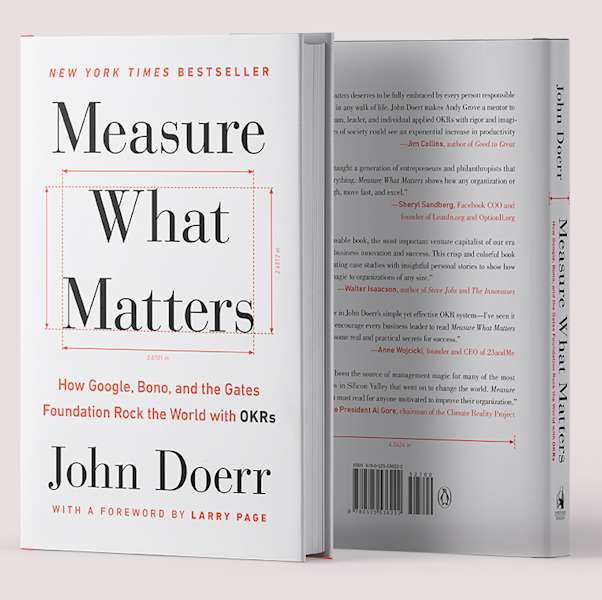
John Doerr on why the right goals matter (TED):
Related
Product strategy and positioning
Vision, strategy, positioning and differentiation: deciding where to play and how to win. Start here for the map.
Prioritization
RICE, ICE, Kano, cost of delay and opportunity cost: choosing what not to build.
Product metrics and the north star
Choosing a north star that reflects customer value, decomposing it into input metrics teams own, and pairing it with guardrails. Start here for the map.