Product thinking and discovery
Research synthesis
Affinity-map quotes into observations, insights and ideas — in separate columns. An insight is surprising, grounded in multiple data points and actionable.
Raw notes are not insights. Synthesis turns observations into patterns the team can decide on. Research that dies in a Google Doc was theater. Feed the opportunity solution tree.
You do not need a research degree. High-leverage habits: shadow support for one hour a week; sit in on sales or CS calls as a silent note-taker; join the product trio for weekly interviews; pull five users who dropped at a funnel step and ask what happened; dogfood with a script and note where even you get stuck. Engineers notice feasibility in real time ("they need SSO before any of this matters") — that is why the trio includes you.
The big idea
- Dump quotes and observations onto stickies (physical or FigJam/Miro).
- Affinity map — group by similarity without forcing your existing categories too early.
- Label clusters as candidate insights.
- Separate observations (what happened) from insights (what it means) from ideas (what we might do). Keep them in different columns so solutions do not pollute evidence.
| Type | Example |
|---|---|
| Observation | 4/6 freelancers tracked late invoices in a color-coded Google Sheet |
| Insight | The job is not "reminders" — it is knowing whether to start new work for a client without opening email |
| Idea | Status badge in the project list; auto-pause rules; digest email |
An insight should be surprising or non-obvious, grounded in multiple data points and actionable. "Users want it to be easy" is not an insight. "Users trust email threads as the source of truth and ignore our notification center" is.
Share a short readout: problem statements updated, opportunity list, open questions, clips or quotes. Include at least one contrary quote so confirmation bias has to argue with evidence.
Engineers often already live in support Slack. Promote patterns ("seven tickets this week about CSV encoding") into a research backlog item instead of one-off patches only. Patches fix today; research decides whether the job needs a different product shape.
This week: run or join one 30-minute Mom Test interview. Write three quotes, one observation cluster and one revised problem statement. If you cannot recruit externally, interview one power user and one churned user.
Walking through it
Six freelancer interviews. Four color-code a Google Sheet of late invoices. Two never open your notification center; they search Sent. The cluster is not "need better reminders." The insight is "the job is knowing whether to start new work without opening email." Ideas (badge, auto-pause, digest) wait in a third column until the team agrees the insight is real.
Common mistakes
- Jumping to ideas on the same sticky as the quote. Solutions pollute evidence.
- "Users want it to be easy." Not surprising, not grounded, not actionable.
- Archiving the readout. If it does not update the opportunity tree, it was theater.
Check yourself
- 4/6 freelancers track late invoices in a color-coded sheet. Observation, insight or idea?
Observation. The insight is what it means for the job (knowing whether to start work); the idea is a badge or digest.
- Why keep observations, insights and ideas in separate columns?
So a clever solution does not get smuggled in as evidence, and so the team can disagree about meaning without losing what happened.
Key takeaways
- Affinity-map into observations → insights → ideas; keep the columns honest.
- An insight is surprising, multi-sourced and actionable.
- Engineers belong in calls, support and the trio; feed continuous discovery, do not archive and forget.
Further learning
The Mom Test (Rob Fitzpatrick)How to talk to customers & learn if your business is a good idea when everyone is lying to you.The Mom Test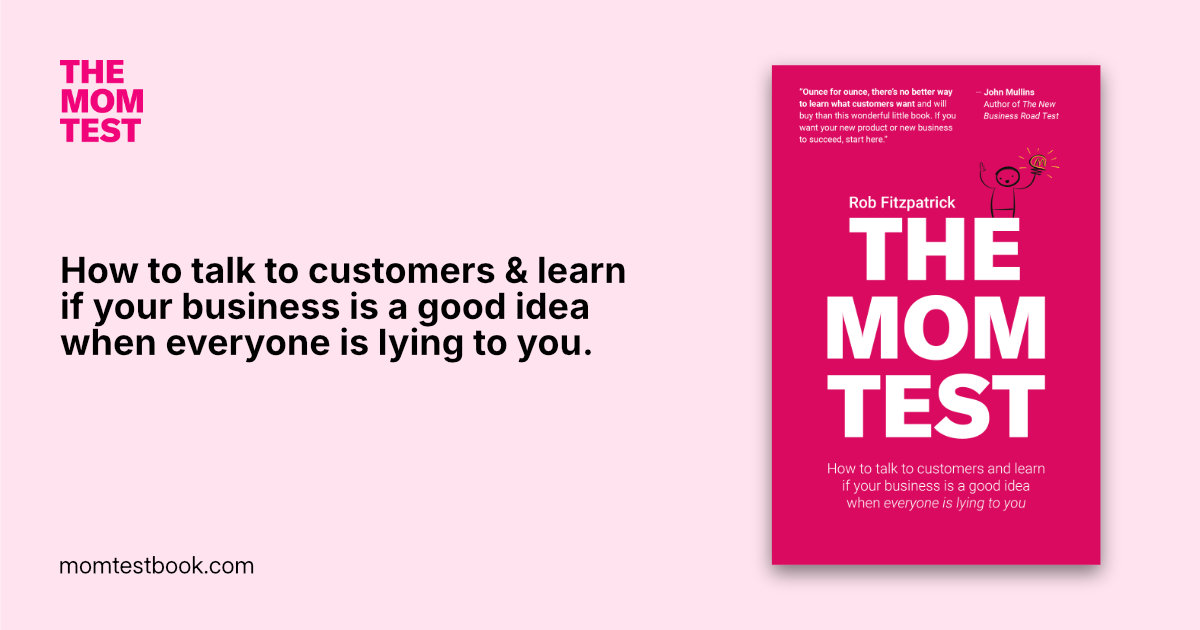
Back to the map: user research.
Related
User research
Interviews that avoid false positives, usability tests with five users, and synthesizing findings. Start here for the map.
Usability testing
Give realistic tasks, ask people to think aloud and do not help until they are stuck. About five users find most issues in a given design; then fix and retest.
Continuous discovery and assumption testing
Weekly customer contact, opportunity solution trees and cheap tests before building.