Building the company
Why startups fail
Premature scaling, no market need, co-founder conflict, and running out of money: the patterns under the official cause of death.
Most startups fail. That is the base rate of trying something new under uncertainty. The official cause of death is often "ran out of money" or "founder left." Those are usually last steps. The underlying failure started earlier: no one needed the product, the team could not execute, competition ate the margin, or the company scaled costs before it had a learning engine.
Paul Graham's framing in How Not to Die is still the emotional truth: startups rarely die mid-sprint with customers pulling product out of their hands. They die when founders get demoralized, stop talking to users, and quietly add "but we're still working on the startup" to a sentence about something else.
"No market need" is the most common intellectual failure: building something interesting that is not important. "Ran out of cash" is the most common mechanical failure: interesting-or-not, the company spends faster than it learns or earns.
| Pattern | Surface story | Deeper mechanism |
|---|---|---|
| No market need | "People didn't get it" | Vanity interest ≠ willingness to pay or habit |
| Ran out of cash | "Fundraising failed" | Burn outpaced learning; see burn and runway |
| Team / co-founder issues | "Differences in vision" | Misaligned incentives, trust break, skill gaps |
| Got outcompeted | "A big player entered" | No moat |
| Pricing / model | "Couldn't monetize" | CAC > LTV, wrong motion for the ACV |
| Product issues | "Tech didn't work" | Sometimes real; often weak problem framing |
| Regulatory / legal | "Compliance blocked us" | Fintech, health, crypto — underestimate timelines |
| Pivot fatigue | "We chased too many ideas" | Reset without a thesis |
Post-mortem compilations (including CB Insights' long-running reviews) cluster around these stories. Exact percentages shift by dataset and year. The ranking of stories is more stable than any single chart.
Interview prompt: "Why do startups fail?" Weak answers recite a failure-rate slogan. Strong answers distinguish no-need vs no-cash vs team vs premature scaling, and name leading indicators they would watch.
Concepts in this section
| Step | Concept | What it answers |
|---|---|---|
| 1 | Premature scaling | When is spend the cause of death, not the symptom? |
| 2 | Co-founder conflict | What do you write down before the crisis? |
| 3 | When to pivot | Evidence and runway, or flail? |
| 4 | Shutting down | How do you stop without burning the next company? |
Common mistakes
- Treating "ran out of money" as the diagnosis. Ask why burn outpaced learning.
- Hiring through a broken co-founder pair. It scales the conflict.
- Pivoting from boredom with two months of cash.
- Success theater — press and launch blogs — while churn slides are skipped.
Key takeaways
- Official causes (cash, founder exit) often mask demoralization and lack of fit.
- Premature scaling spends runway before the company can learn or retain.
- Co-founder conflict is preventable with explicit roles, vesting, and hard conversations.
- Pivot from evidence with runway left. Shut down cleanly when the thesis is dead.
- Employees should watch thrash, burn language, and founder avoidance.
Further learning
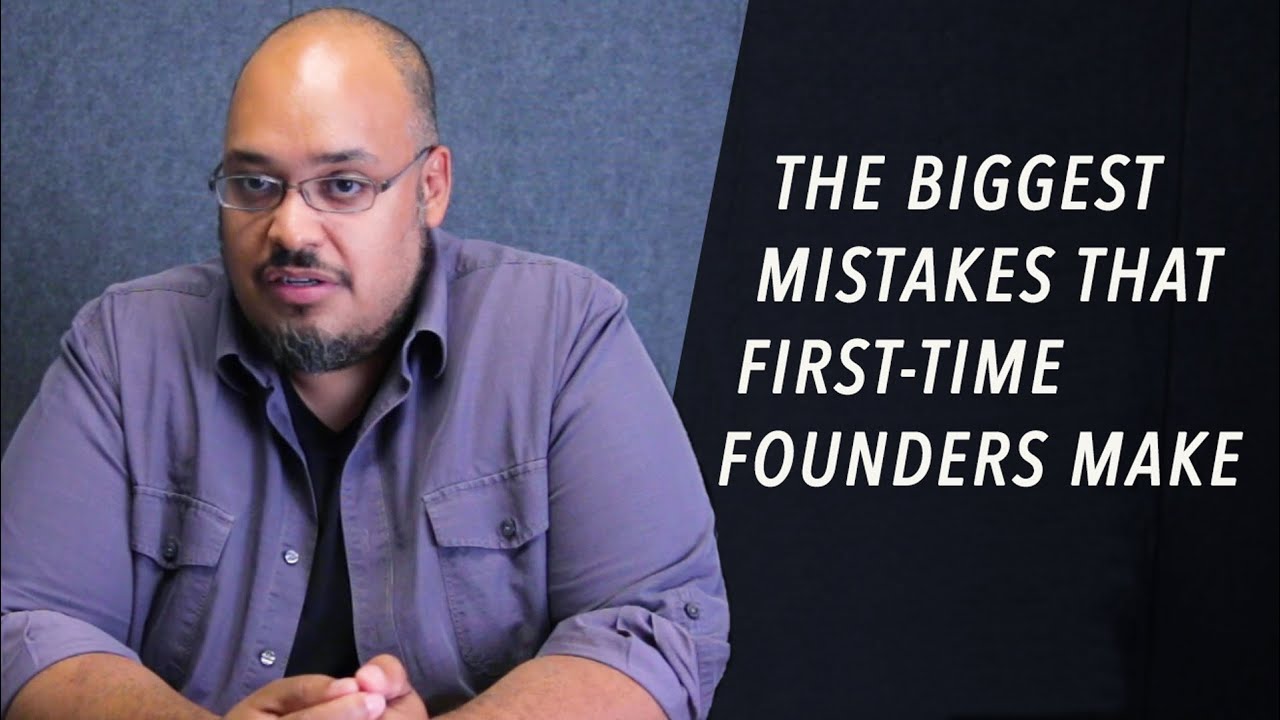
 YC — The Biggest Mistakes First-Time Founders MakeY Combinator CEO and Partner Michael Seibel [https://twitter.com/mwseibel] on the biggest mistakes first-time founders make. Topics 00:10 [https://youtu.be/D56QeyyQMLI?t=10s] – Solving a problem you don’t care about 1…Y Combinator
 Do Things That Don't Scale (Paul Graham)Do Things that Don't Scalepaulgraham.com
Related
Product-market fit
What fit feels like, how to measure it, the false positives that fool teams, and what changes after you find it.
Burn, runway and default alive
Calculating burn and runway, the default-alive test, and how to extend runway.
Founder equity, vesting and agreements
How co-founders split equity, implement four-year reverse vesting with cliffs, handle acceleration and file the 83(b) before the clock runs out.