Building the company
Hiring and early teams
First hires, compensation bands, equity grants by role, and culture.
Early hiring is the highest-leverage and highest-risk activity after finding product-market fit (and sometimes before). One great first engineer can 3× shipping speed. One bad hire can stall the team for a quarter and poison culture. Founders who treat hiring as something HR will "set up later" quietly lose to founders who treat it like fundraising: a full-time craft of sourcing, selling and closing.
This is the company side — who to hire, what to pay, how equity works at early stages, and how culture becomes a filter. For the employee view of offers and dilution, see employee equity and option pools.
Concepts in this section
Read them in order.
| Step | Concept | What it answers |
|---|---|---|
| 1 | First hires | Generalist or specialist, and when? |
| 2 | Founder recruiting | How do you source, screen and close at seed? |
| 3 | Early compensation and equity | What do bands and grants look like? |
| 4 | Firing and onboarding | How do you convert a grant into velocity — and exit a miss? |
Index Ventures' US seed averages put a senior engineer around ~1.0% fully diluted, mid around ~0.45%. YC's spirit is similar: be generous early, on the order of ~10% of the company for the first ~10 employees, with standard four-year vesting and a one-year cliff. First engineers often land 0.5–1.5%. Cash figures in old blog posts go stale; use current OptionPlan, Carta or investor surveys. A $40–80k cash discount vs big-tech only works if the grant is real and the company might become valuable — model dilution, not the no-dilution fantasy.
If you are an early employee: ask for fully diluted %, option count, strike, vesting and pool size, and model dilution. If you are becoming a hiring manager: protect the bar, write the 90-day plan before the offer, and spend founder-quality time on closing. Interview angle: "How would you hire the first engineer for X?" Strong answers cover sourcing, bar, compensation shape and what "good in 90 days" means — not just interview-process theater.
Common mistakes
- Specialists before the machine works, or a VP of Sales before you can describe who buys.
- Ad-hoc offers that create 2× equity inequity for the same work.
- Selling no-dilution exit math.
- Six-month PIPs on eight months of runway.
- Day-30 still waiting on credentials — a founder failure, not an employee one.
Key takeaways
- Hire generalists for bottlenecks; specialists after the machine works.
- Founders own recruiting early: source outbound, move fast, sell the real job.
- Equity is the upside. Use order-of-magnitude bands (Index / YC) and standard 4-year vest with cliff.
- Write levels and bands early to prevent inequity.
- Culture is enforced behavior. Performance problems need fast feedback and decisive exits.
Further learning
Kirsty Nathoo (YC) on startup mechanics including hiring and sharing equity:
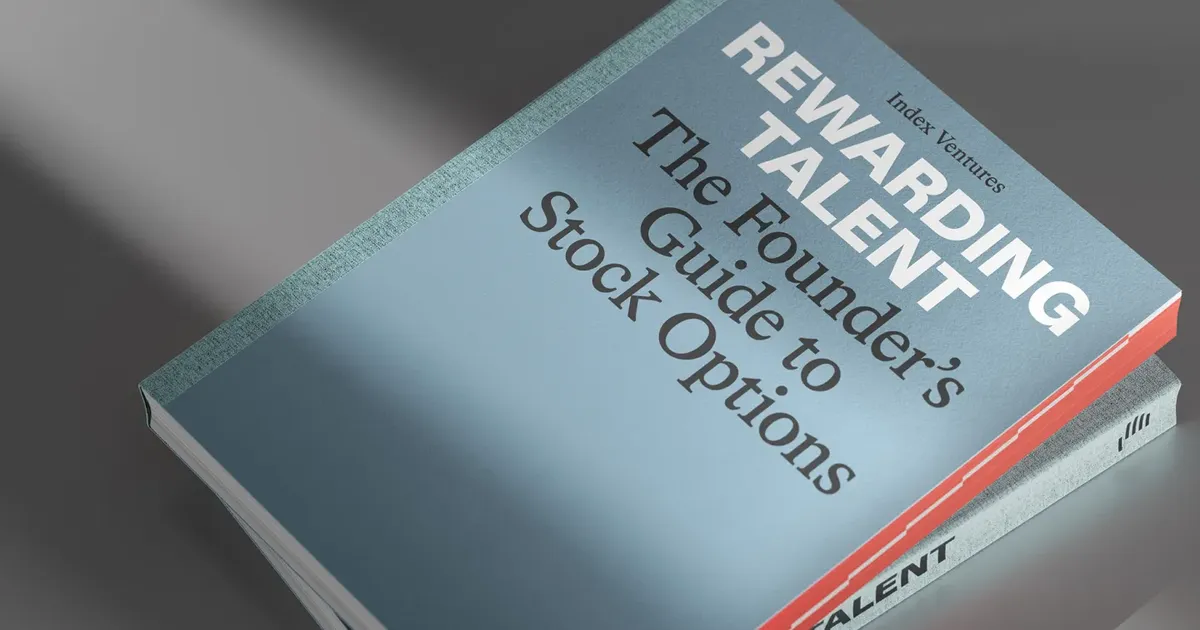
 Index — calculating initial grants at seedRewarding Talent | Option grants at seed | Calculating initial grants | Index VenturesIndex Ventures
 The Holloway Guide to Equity CompensationStock options, RSUs, job offers, and taxes—a detailed reference, including hundreds of resources, explained from the ground up, for both employees and managers.Holloway
 YC — How to Hire Your First EngineerHarj Taggar [https://twitter.com/Harjeet] is cofounder and CEO of Triplebyte [https://triplebyte.com/] (YC S15). Triplebyte helps great engineers find work at the fastest growing companies in the world, with the least…Y Combinator
Related
Employee equity
Options vs RSUs, strike prices and 409A, vesting and exercise windows, and how to evaluate a startup offer with ownership math.
Option pools
Reserved equity for hiring — size it from a plan, watch the pre-money shuffle, and refresh before the tank is empty.
Career strategy
Choosing companies, teams and specialties deliberately: big tech vs startups, generalist vs specialist.