Production and case studies
Designing AI product experiences
Interaction design for probabilistic systems: trust, control, failure states and human-in-the-loop.
Classical software fails loudly: a 500, a validation error, an empty state you designed. LLM products fail plausibly — fluent wrong answers, confident omissions, actions the user did not intend. UX is not a coat of paint on the model. It is how you set expectations, show uncertainty, give control and recover when the system is wrong.
Product strategy for where AI belongs is covered in AI product strategy. This page is the interaction layer once you have decided to ship. Engineers own much of this surface: streaming, citations, approval gates and metrics land in the PR, not in a polish ticket after launch.
Concepts in this section
Read them in order. Each one builds on the one before.
| Step | Concept | What it answers |
|---|---|---|
| 1 | Interaction models | Chat, inline, copilot, agent or batch? |
| 2 | Calibrated trust | How do you stop over-trust without killing use? |
| 3 | Failure UX | What happens when the answer is wrong? |
| 4 | Human-in-the-loop | When must a person approve, and how do you measure it? |
Two industry baselines every AI product engineer should skim:
- Google PAIR — People + AI Guidebook — onboarding, explainability, feedback, control, failure.
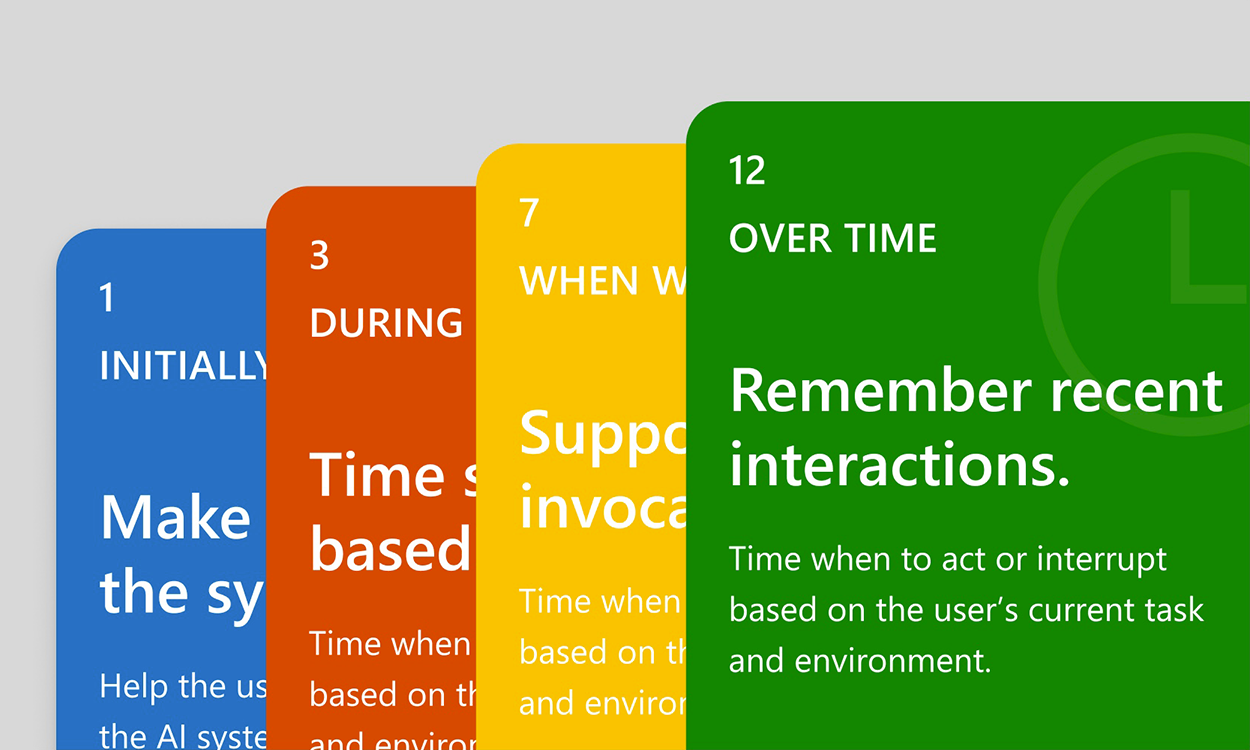
- Microsoft HAX — 18 guidelines across initial use, during interaction, when wrong, and over time.
Use them as review prompts: "Which HAX guidelines does this screen violate?" beats inventing principles each sprint.
Before shipping an AI surface, tick: expectations set; provenance for factual claims; easy dismissal of suggestions; correction and feedback; scoped autonomy for side-effecting tools; failure and empty-retrieval states designed; acceptance and escalation metrics wired. If any box is unchecked, the launch is a demo.
Pair perceived speed with latency and cost. A streamed draft with real stage text beats a silent wait of the same length.
Common mistakes
- Chat as a junk drawer for a job that is a form or a batch pipeline.
- Demo-path-only specs. Empty, loading, partial and failure states never make the PRD.
- Request count as the success metric. Acceptance and edit distance tell you whether the assist helped.
Key takeaways
- Match chat, inline, copilot, agent or batch to task structure and stakes.
- Calibrate trust with clear limits, citations and honest uncertainty.
- Design failure, correction and undo before the launch demo.
- Use HITL for irreversible or hard-to-detect errors. Package context on handoff.
- Measure acceptance, edit distance, task success and escalation, and align them with evals.
- Review against PAIR and HAX instead of reinventing principles.
Further learning
People + AI Guidebook (Google PAIR)A toolkit for teams building human-centered AI products.pair.withgoogle.com Guidelines for Human-AI Interaction (Microsoft HAX)Best practices for designing AI user experiences What are the Guidelines? The Guidelines are evidence-based best practices for designing your AI user experiences. How do I use the Guidelines? The Design Library helps …Microsoft HAX Toolkit
 Microsoft HAX Toolkit overviewCollaborative tools to help you create more effective and responsible human-AI experiencesMicrosoft HAX Toolkit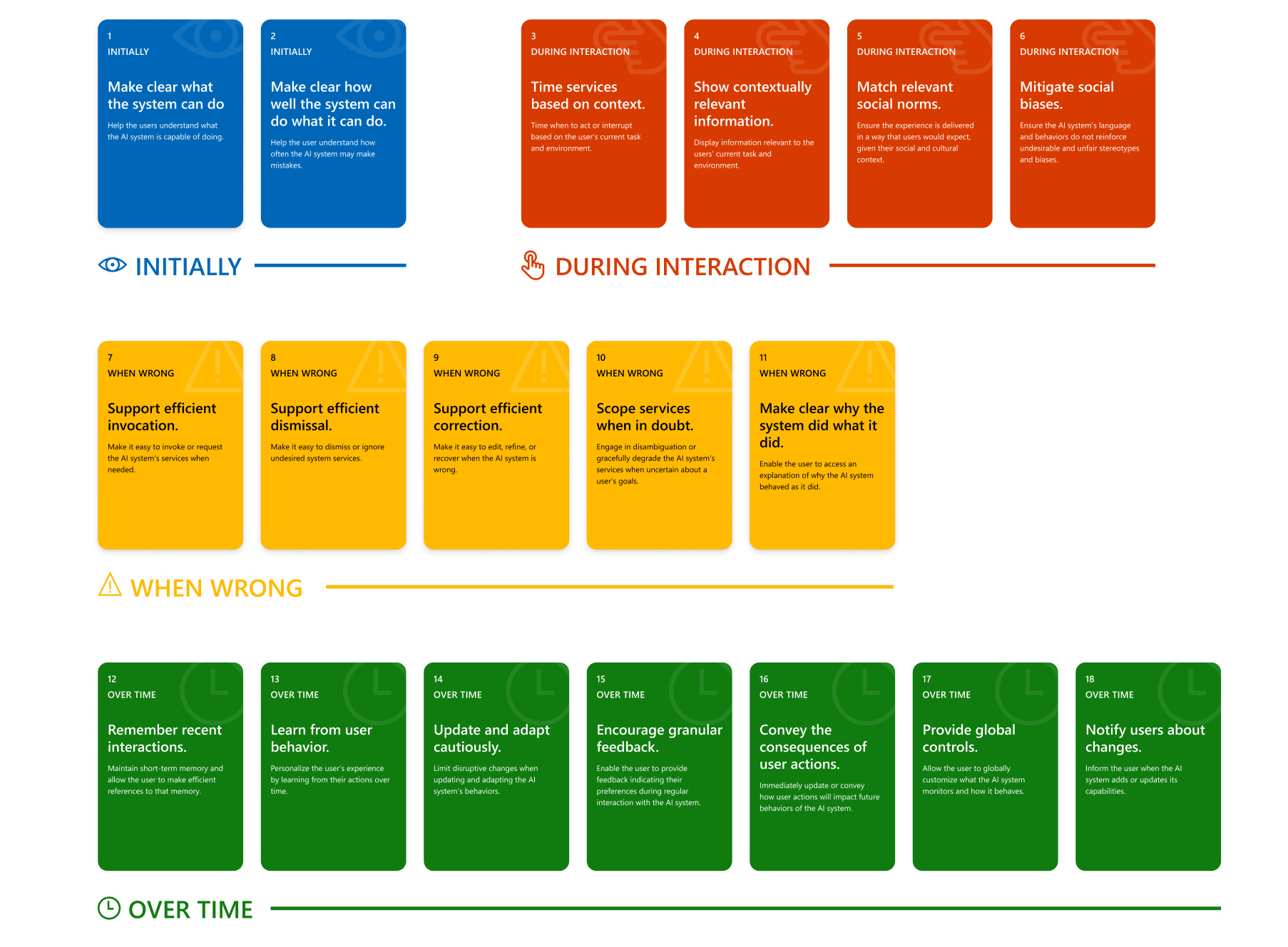
Start with interaction models.
Related
AI product strategy
What to build with AI, how to defend it, how to price it, and how evals become product requirements.
Agents and agent architectures
Workflows vs agents, the core patterns, ReAct loops, planning and knowing when to stop.
Evaluating LLM apps
A fixed set of inputs plus a way to score outputs, so you can tell whether a change helped.